

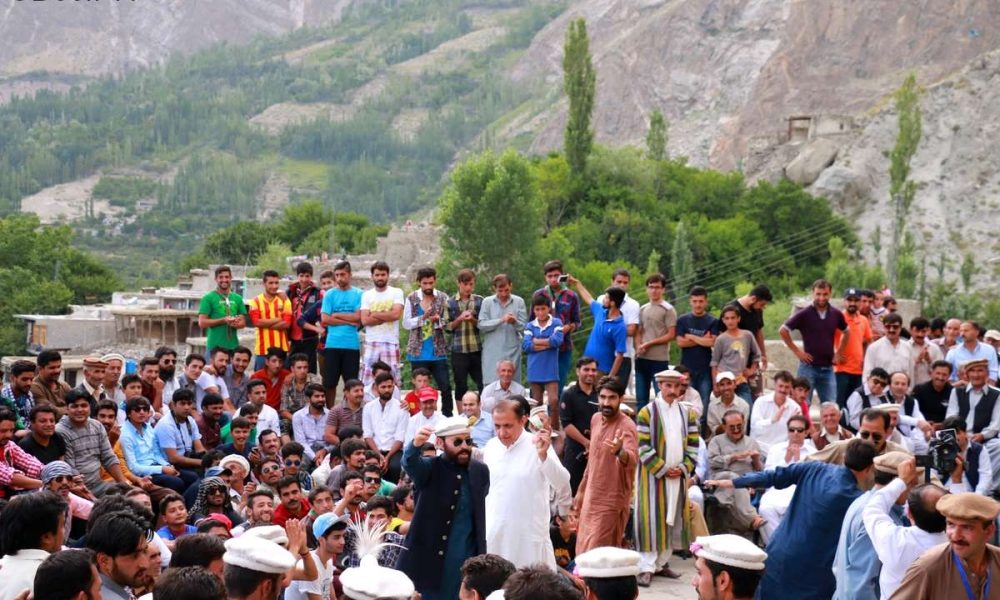
My father left Hunza many years ago for a simple reason: he wanted a better future for his family. Like many people from the mountains, he moved to Karachi in search of education, work and opportunities that were difficult to find back home.
I was born and raised in Karachi and built my career here. But Hunza has always remained home in another sense.
Every summer, I take my son back to our village. His routine there is completely different from his life in Karachi. He spends time with relatives, walks through the orchards and fields, watches the animals around the house and wakes up to mountains outside the window. He loves being there.
Watching him, I sometimes think about my father. He grew up among the same mountains, but when it was time to build his future, he had to leave them.
And that makes me wonder: when my son grows up, will he have a reason to stay?
Gilgit-Baltistan has changed considerably since my father left. Education and healthcare have improved, tourism has grown, and improved connectivity has opened the region to the rest of the country and the world. Yet for many young people, one reality remains familiar: if you want certain kinds of education or careers, you often have to look elsewhere.
The journey can begin with leaving the village for school, then moving away for university and eventually settling somewhere else for work. There is nothing wrong with that. My own life is the result of my father making exactly that choice. The problem is when leaving becomes the only practical option.
I often think about what could make that choice different.
Could a young person from Hunza study climate science and later work on the glaciers and water systems they grew up around? Could an agriculture graduate turn local produce into a business? Could a technology graduate work for a company in Karachi, Islamabad or even another country while living in their village?
Gilgit-Baltistan is already attracting attention for tourism, climate change, glaciers, water, biodiversity and agriculture. But the people who grow up there should also have the opportunity to build careers around these resources.
This is especially relevant to me because I work in research administration. I have seen research projects create more than publications. They can train young people, create jobs, build institutions and connect local researchers with opportunities elsewhere. When research is conducted in Gilgit-Baltistan, some of that knowledge, capacity and opportunity should remain there too.
Of course, this requires more than research. Reliable electricity, good internet, quality education and healthcare, stronger institutions and support for local businesses are what make it possible for people to build lives and careers.
The goal is not to convince every young person to stay in Gilgit-Baltistan. They should leave, explore, study and work wherever their ambitions take them. Some will return and some will not.
What matters is having a choice.
My father left Hunza because, at that time, leaving offered his children possibilities he could not see at home. I am grateful he made that decision.
But now, when I watch my son running through the village his grandfather once left, I hope his generation faces a different question. Not, “Where do I have to go to build a future?” but, “Where do I want to build one?”
If one day he chooses Hunza, I hope it is not simply because it is where his family comes from. I hope it is because he can see a future for himself there.
Perhaps that is the kind of development Gilgit-Baltistan needs most: not a future that asks its young people to stay, but one that gives them a reason to.
Leave a Comment